
Estepona Guide
The Garden of the Costa del Sol
What is Estepona?
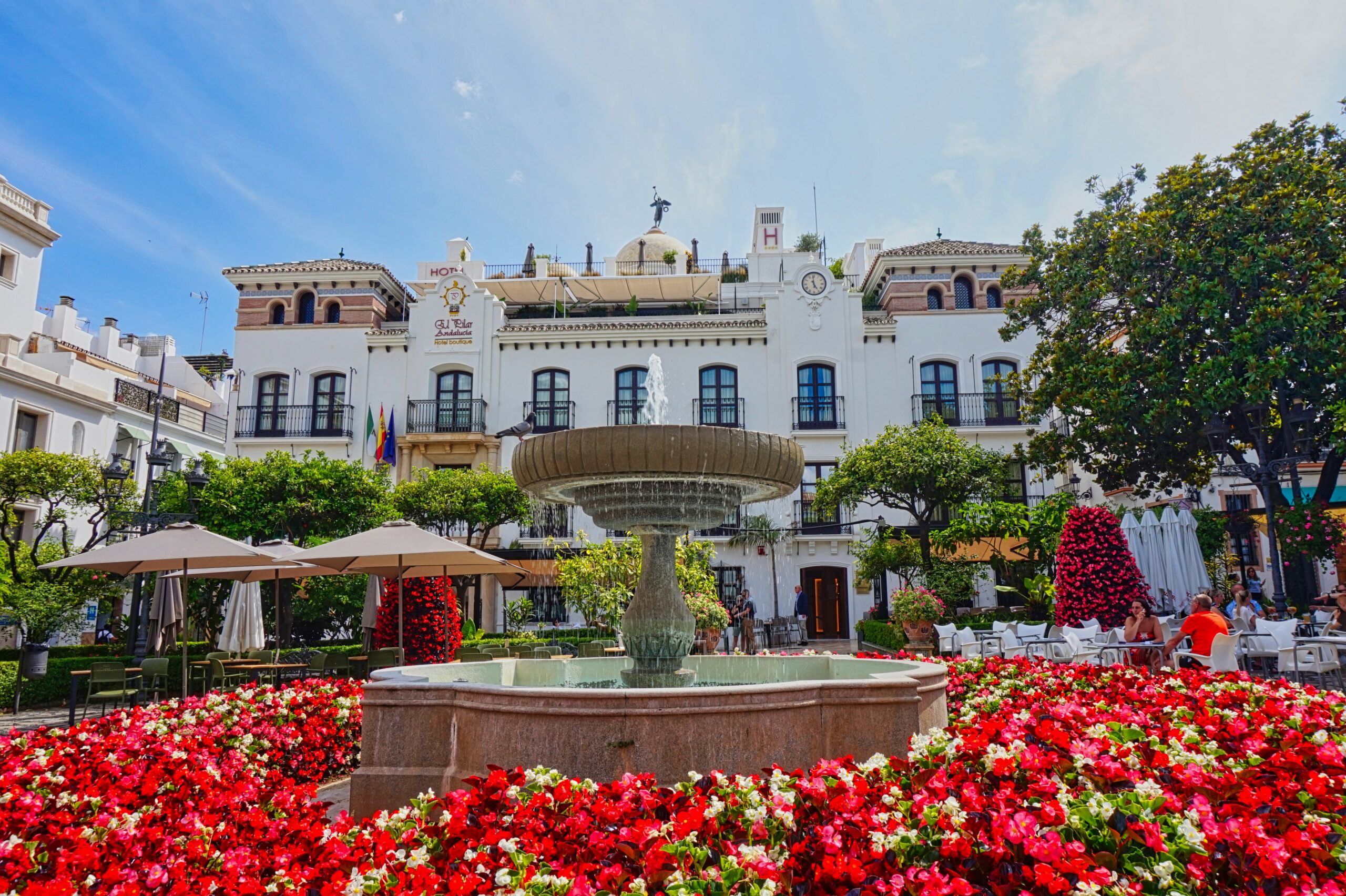
Estepona is a resort town on the western Costa del Sol, around 25–30 minutes’ drive from Marbella and Puerto Banús. It stretches along roughly 20km of coastline and is best known for its well-preserved historic Old Town, a working marina, and a noticeably calmer pace of life than its busier neighbours further east.
The town is often called the “garden of the Costa del Sol” for its flower-lined streets, and more recently has become known as an open-air gallery thanks to its Ruta de los Murales — one of the largest collections of urban street art in Europe. Estepona draws a strong mix of long-term expats and Spanish families alongside holiday-home buyers, giving it a more residential, year-round feel than many resort towns nearby.
History of Estepona
Estepona’s Old Town core dates back centuries — the Torre del Reloj (clock tower), built in 1473 as part of a church, is thought to be the oldest religious building on the Costa del Sol and still stands at the heart of the historic centre today.
Long a fishing and agricultural town, Estepona modernised more gradually than Marbella during the tourism boom of the late 20th century, which helped keep its Old Town’s narrow streets, whitewashed houses and small squares largely intact.
In September 2012, then-mayor José María García Urbano launched the Ruta de Murales Artísticos, commissioning street artists to paint building façades across the Old Town. The first work, “La Venus” (120m², referencing the archaeological figure La Venus de Estepona), kicked off a project that has since grown to around 70 murals, including one of the largest vertical murals in Europe — seven storeys tall — near the town’s botanical garden and orchidarium.
Where is Estepona?
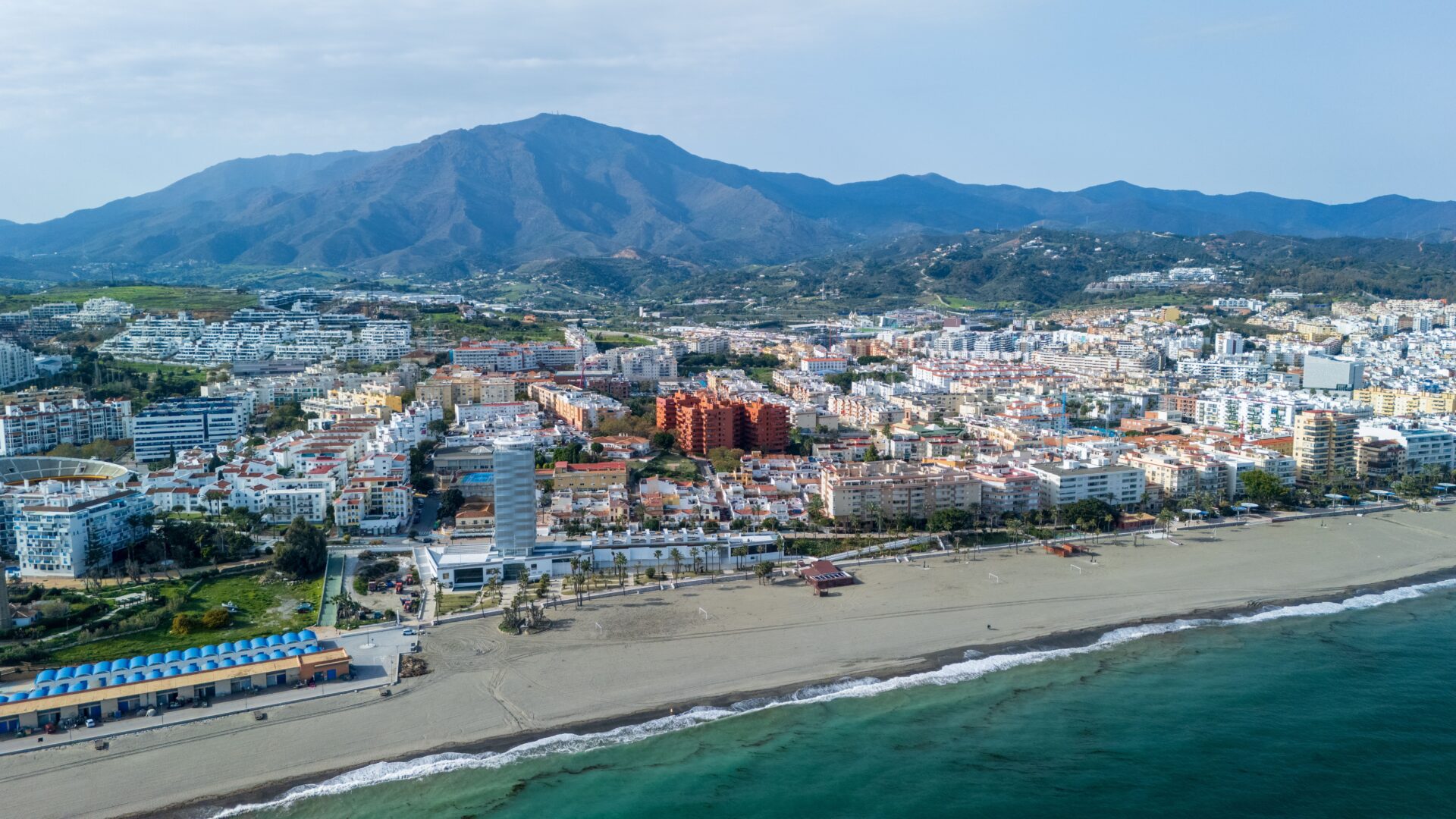
Estepona sits on the western Costa del Sol, roughly 25–30 minutes by car from both Marbella and Puerto Banús along the AP-7/A-7. It is also noticeably closer to Gibraltar Airport (around 35km) than to Málaga Airport (around 85km), making it a practical base for owners who fly via Gibraltar.
The municipality runs along around 20km of coastline, from the New Golden Mile in the east to the border with Casares in the west, backed by the Sierra Bermeja mountains.
| Destination | Distance | Drive time |
| Marbella | ~25 km | ~25–30 min |
| Puerto Banús | ~28 km | ~25–30 min |
| Málaga Airport | ~85 km | ~60 min |
| Gibraltar Airport | ~35 km | ~35–40 min |
| Sotogrande | ~20 km | ~20 min |
How big is Estepona and what are its neighbourhoods?
Estepona’s municipality has a population of roughly 70,000 and covers a wide stretch of coastline and hinterland. Away from the historic centre, the area breaks down into several distinct districts, each with its own character:
| Sub-area | Character |
|---|---|
| Estepona Old Town (Casco Antiguo) | Historic centre with the marina, murals and flower-lined streets; walkable and largely pedestrianised |
| New Golden Mile | Modern resort stretch running east toward San Pedro, with beachfront and golf-adjacent developments |
| Selwo | Family-oriented, more residential and inland, near Selwo Adventure Park |
| El Padrón | Established residential district between the town centre and the New Golden Mile |
| Los Flamingos | Golf resort area around Villa Padierna, home to three championship courses and five-star hospitality |
Browse current listings across Estepona on our Estepona properties page.
What style of homes can you find in Estepona?
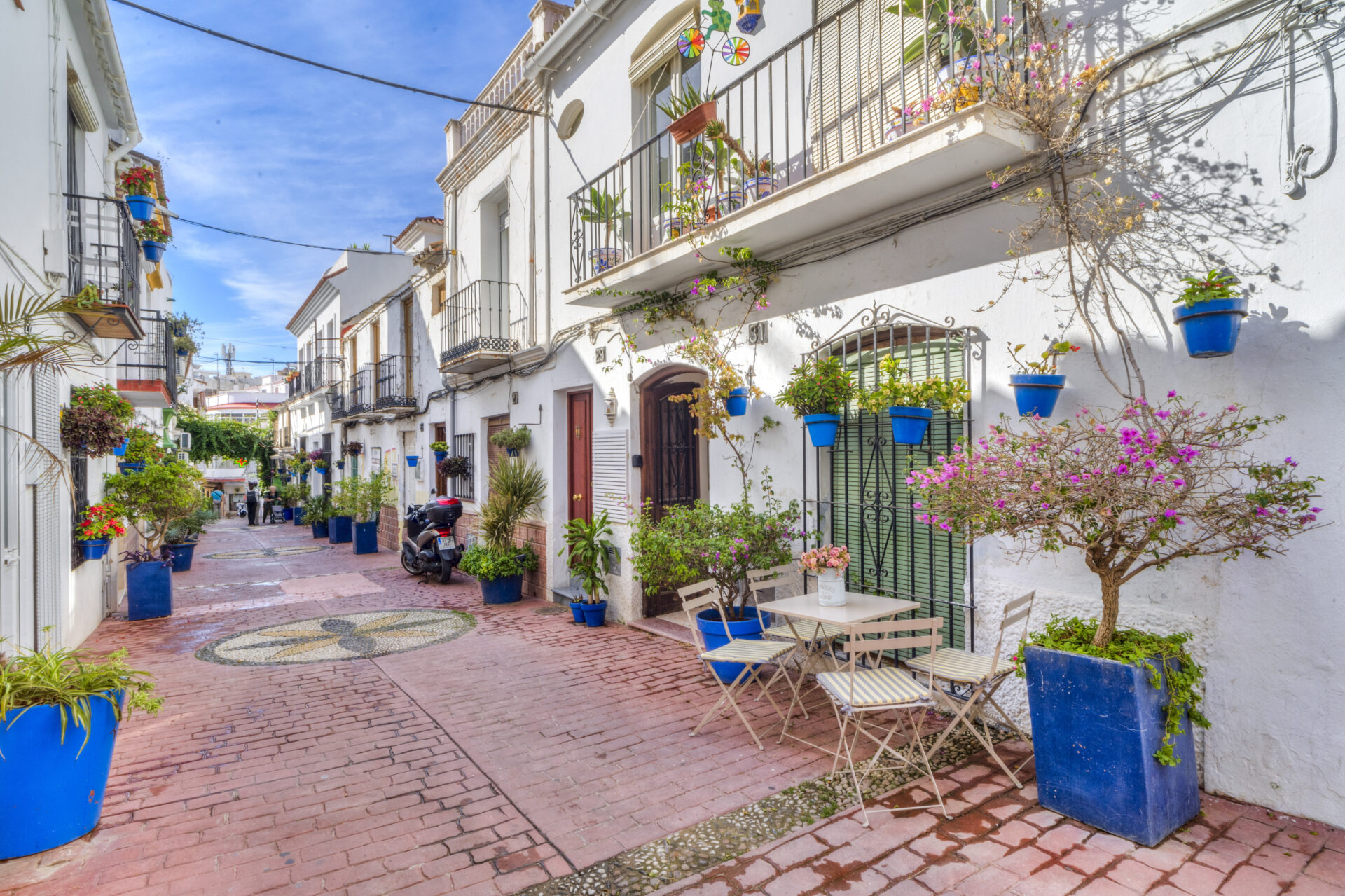
The Old Town centres on traditional Andalusian townhouses and apartments — whitewashed façades, wrought-iron balconies and narrow pedestrian streets. Along the seafront and marina, mid-rise apartment blocks from recent decades sit alongside newer boutique developments.
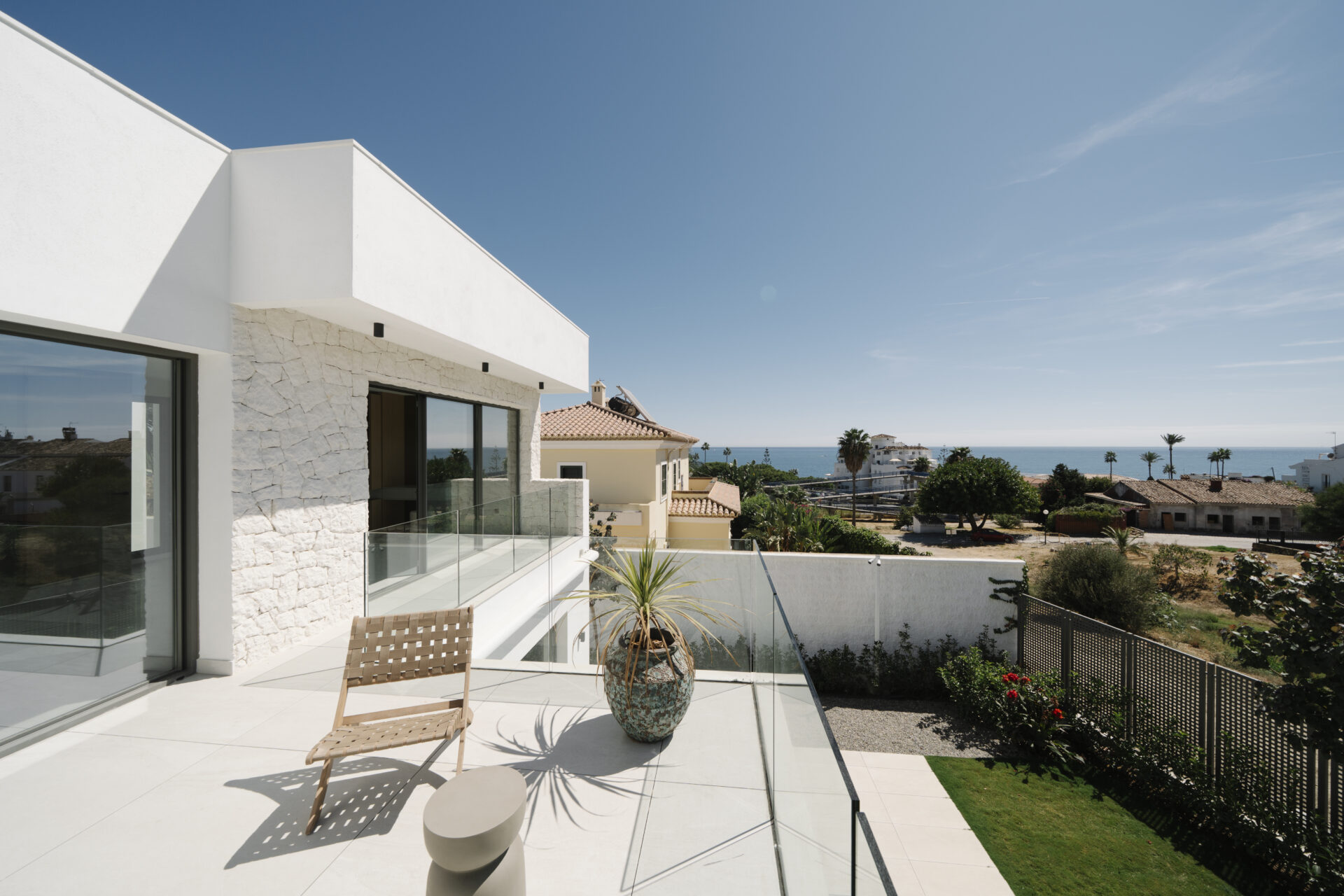
Further out, the New Golden Mile and Los Flamingos areas offer gated resort-style communities, modern villas and golf-frontline properties, with a steady pipeline of new-build and off-plan developments along the coast.
How much do properties cost in Estepona?
| Segment | Avg. asking price / m² | Typical starting price |
|---|---|---|
| Estepona Pueblo (Old Town & centre) | ~€4,288/m² | from ~€250,000 |
| New Golden Mile & Los Flamingos (new-build) | ~€7,000/m² | from ~€600,000 |
| Estepona apartments (overall) | ~€4,635/m² | from ~€220,000 |
Estepona has been one of the Costa del Sol’s stronger-performing markets in recent years. Estepona Pueblo (the town centre and Old Town) has seen asking prices rise by roughly 20% year-on-year to around €4,288/m², while premium beachfront new-builds along the New Golden Mile and Los Flamingos now reach €6,000–€8,000/m². Reported town-wide averages vary depending on the mix of segments a source includes, ranging from roughly €4,234/m² to €6,496/m², so it’s worth comparing like-for-like when researching a specific street or development.
What is there to do in Estepona?
Dining
The seafront is lined with chiringuitos serving fresh fish and paella within sight of the water, while the Old Town’s plazas hold traditional tapas bars that stay busy with residents year-round rather than only in high season.
Around the marina and along the New Golden Mile, a growing number of international and fine-dining restaurants cater to the resort crowd, giving Estepona a wider culinary range than its small-town reputation might suggest.
Around the marina, restaurants cover everything from Mediterranean and fresh seafood to Asian and Italian kitchens, while a dedicated deli adds provisions for residents who’d rather cook in with a view of the boats.
Golf, tennis and outdoor sport
Los Flamingos, anchored by the five-star Villa Padierna Palace Hotel, is home to three championship golf courses — Los Flamingos, Tramores and Alferini — along with a golf academy and tennis facilities used by residents and visitors alike.
Beyond golf, the Sierra Bermeja foothills offer hiking and mountain-bike trails, the coastline supports sailing and watersports out of the marina, and Selwo Adventure Park and Selwo Marina give families an easy day out close to town.
Sailing schools and paddleboard rental operate out of the Puerto Deportivo alongside the marina’s restaurants, giving residents an easy way onto the water without owning a boat of their own.
Shopping
The Old Town’s pedestrian streets hold independent boutiques and a busy weekly street market, while the Puerto Deportivo marina adds a cluster of clothing, homeware and gift shops alongside its restaurants.
The main Wednesday street market on Calle Eslovaquia is one of the largest on this stretch of coast, with more than 200 stalls, while a smaller Sunday market sets up in the port for crafts and clothing.
Nightlife and wellness
Estepona’s evenings are noticeably quieter than Puerto Banús’ — marina-front bars and Old Town terraces set the tone rather than late-night clubs. Spa and wellness facilities at the resort hotels around Los Flamingos and the New Golden Mile cater to a more low-key, health-focused crowd.
A handful of marina-front cocktail bars stay open later in summer, but for a proper night out most residents head east to Puerto Banús or Marbella, around 25 to 30 minutes away.
Compare Estepona with Marbella’s western districts in our full area guides, including San Pedro de Alcántara and Benahavís.
What is life like for kids in Estepona?
Estepona has a strong year-round family community, helped by attractions like Selwo Adventure Park, long stretches of family-friendly beach, and an Old Town that’s easy to navigate on foot or by bike.
A number of international schools serve the area, covering the New Golden Mile, the San Pedro–Estepona corridor and the town centre itself.
Schools near Estepona
| School | Age range | Distance / location |
|---|---|---|
| The International School Estepona | 3–18 | El Paraíso, New Golden Mile |
| Mayfair International Academy | 1–18 | Between San Pedro and Estepona |
| Atalaya International School | 3–18 | Estepona–Marbella border |
| Colegio San José | 3–18 | Estepona town centre |
| Laude San Pedro International College | 1–18 | ~15 min from central Estepona |
Colegio San José, in the town centre, has featured on Forbes’ list of Spain’s top 50 schools. For a fuller comparison of coastal schools, see CarlingPetri’s Buyer’s Guide.
Estepona vs. Marbella and Puerto Banús — what’s the difference?
Estepona sits 25–30 minutes west of both Marbella and Puerto Banús, and trades some of their buzz for space and value: asking prices in Estepona run well below those in Puerto Banús and the Golden Mile, and the Old Town retains a working-town feel rather than a purpose-built resort one. Buyers prioritising nightlife, marina glamour and walkable beach-bar culture tend to look at Puerto Banús first; buyers prioritising value, a genuine town centre and a quieter daily rhythm — without giving up golf or beach access — increasingly choose Estepona. Families comparing the two, or San Pedro de Alcántara in between, often weigh all three before deciding.
Fun facts about Estepona
- The Torre del Reloj, built in 1473 as part of a church, is believed to be the oldest religious building on the Costa del Sol.
- Estepona has been the Costa del Sol’s unofficial “mural capital” since 2012, now home to around 70 large-scale street artworks.
- The project’s first mural, “La Venus” (120m²), references La Venus de Estepona, an archaeological figure linked to the town.
- One of Europe’s largest vertical murals — seven storeys tall — sits near Estepona’s botanical garden and orchidarium.
- The municipality spans roughly 20km of coastline, from the New Golden Mile to the border with Casares.
- Los Flamingos is home to three championship golf courses at the five-star Villa Padierna Palace Hotel.
Frequently Asked Questions
What is Estepona known for?
Is Estepona a good place to live?
How far is Estepona from Marbella and Puerto Banús?
What property types are available in Estepona?
How much do properties cost in Estepona?
What is there to do in Estepona?
Is Estepona family-friendly?
Buying in Estepona with CarlingPetri
CarlingPetri’s Marbella team covers every sector of Estepona, from Old Town townhouses to golf villas at Los Flamingos and new-build apartments along the New Golden Mile. Our Estepona specialist can talk you through current inventory, realistic pricing by sector, and which areas suit your priorities — schools, sea views, or golf access. Start with our Estepona listings, get a clear view of costs in our Buyer’s Guide, or explore financing options before you view.
Buy with us
Tell us how you want to live, and we find the property to match. You’ll get homes that fit your needs, learn what each area is really like, and get full support throughout the entire process. Our buyers come from the UK, Scandinavia and across Europe, and we look after each of them in their own language.