
Why buy property in Marbella? Because it offers 320+ days of sunshine a year, direct access to over 160 flight destinations from Málaga Airport, one of Europe’s densest concentrations of golf courses, established English-speaking private healthcare and schools, and a resilient real estate market where foreign nationals already account for the majority of transactions.
Why Buy Property in Marbella? The Areas That Matter Most
Below are 10 reasons, each backed by a named fact or figure, for anyone weighing up whether now is the right time to buy on the Costa del Sol.
Marbella isn’t a single homogenous market — the Golden Mile, Nueva Andalucía, Puerto Banús, San Pedro de Alcántara and Benahavís each attract a slightly different type of buyer, at different price points, for different reasons. But the ten factors below apply across the whole municipality, and they’re the reasons that come up again and again when international buyers explain, in their own words, why they chose Marbella over the Algarve, the French Riviera, Tuscany or Dubai. Where a figure is quoted, it’s sourced from current market, climate or infrastructure data rather than generic marketing claims, so it can be checked and relied on.
1. The climate is genuinely one of the best in Europe
Marbella gets around 2,919 hours of sunshine a year, with July alone averaging 348 sunshine hours and 11.6 hours of daylight sun. Average daytime highs range from a mild 16°C in January to 28°C in August, and the Sierra Blanca mountain range acts as a natural windbreak, shielding the town from the harsher weather that reaches other parts of the Spanish coast. The Mediterranean Sea itself works as a thermostat, keeping winter nights rarely below 10°C. This is a livable, year-round climate rather than a purely seasonal one, which is precisely why Marbella attracts full-time residents and not just summer holidaymakers — a property here gets used, and lived in, across all twelve months.

2. The market has kept growing even as other coastal markets cooled
Marbella’s average asking price stood at roughly €5,524 per m² in January 2026, according to Idealista data, with prices up 9.4% year-on-year and a further 0.7% month-on-month at the end of 2025. Villas and apartments move at different price points — apartments have averaged around €6,151/m², reflecting strong demand for lock-up-and-leave coastal living. In the ultra-prime segment, 62% of transactions above €2.5 million are made by foreign buyers, and 60% of those purchases are completed without financing, a sign of genuine long-term wealth deployment rather than speculative, leveraged buying. For anyone weighing whether the market has already peaked, this combination of sustained price growth and cash-heavy demand at the top end suggests continued confidence rather than a bubble.
3. Foreign buyers already dominate the local market
Foreign nationals account for over 42.9% of property transactions across Málaga province as a whole, rising to more than 60% in Marbella itself and over 80% in neighbouring Benahavís. Buying here means joining an already-established international buyer base, not being an outlier in the market — the legal processes, agencies, notaries and property managers in Marbella are all set up around serving overseas buyers as a matter of course, which materially simplifies the purchase process compared with less internationally-oriented regions of Spain.
4. Málaga Airport puts the world within reach
Málaga–Costa del Sol Airport (AGP) is roughly 45 minutes’ drive from central Marbella and connects to 169 destinations across 42 countries via 52 airlines, as of 2026. That range spans short hops to the UK and northern Europe through to long-haul connections further afield. Few second-home or relocation markets in Europe offer this level of direct international connectivity from a single regional airport, which matters both for buyers who plan to fly back and forth regularly and for those who want easy access for visiting family and friends.
5. It’s one of the most golf-dense destinations on the planet
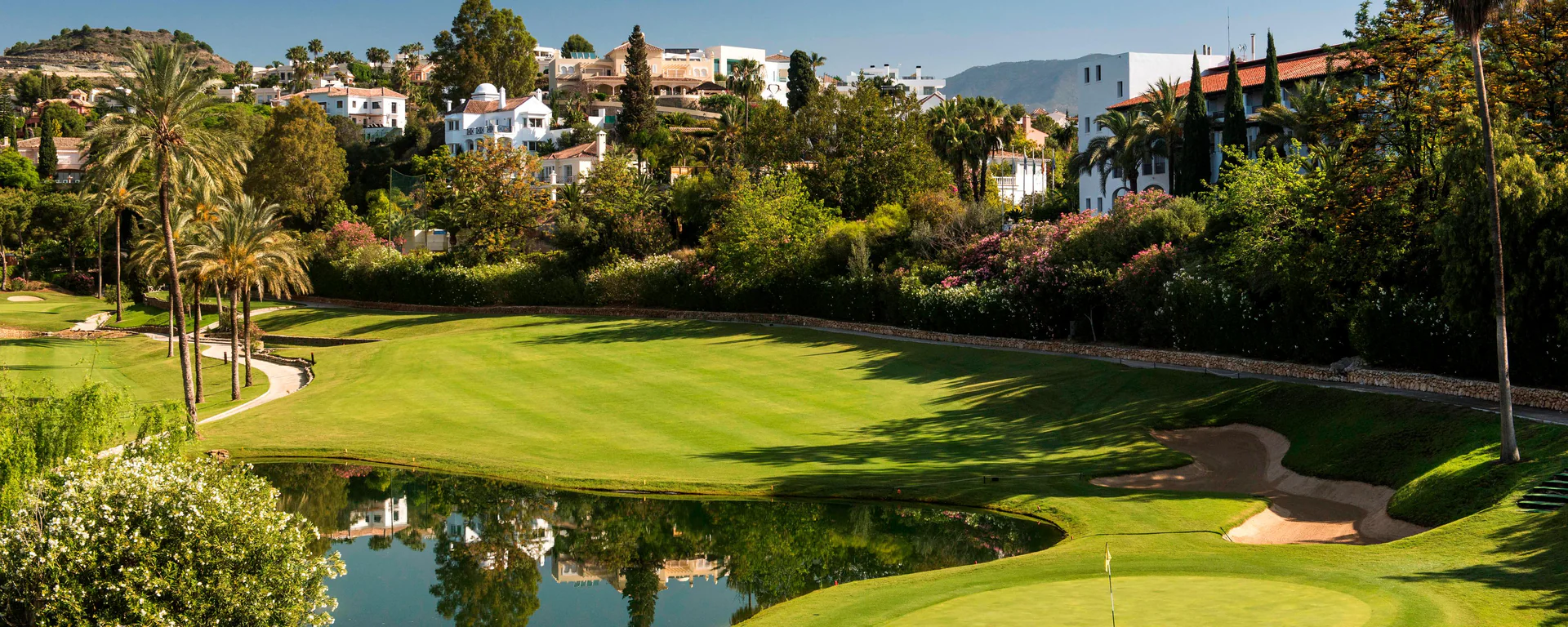
Marbella has 19 golf courses packed into a 26 km stretch of coastline, and the wider Costa del Sol — nicknamed the “Costa del Golf” — has more than 70 courses between Marbella and Sotogrande, with the highest concentration found across Marbella, Estepona, Mijas and Benahavís. Marbella holds the highest density of golf clubs of any municipality in Spain, and arguably in continental Europe. For buyers who golf, few markets anywhere in the world offer this many courses within a short drive of home, and it’s a major reason golf-adjacent areas like Nueva Andalucía and Benahavís command a premium.
6. Private healthcare here is built for international residents
Marbella is served by major private hospital groups including Quirónsalud, part of Spain’s largest private hospital network with 20 hospitals nationwide, which runs a dedicated international patients’ unit with English-speaking coordinators from its 10,500 m² Marbella facility covering 32 medical specialities. Hospiten, part of an international hospital network treating over a million patients a year, also operates locally with multilingual staff geared toward the area’s largely expat patient base. Both groups hold agreements with major national and international health insurers, which matters considerably for buyers relocating full-time or planning extended stays.
7. International schooling options are already well established
The Marbella and western Costa del Sol area has more than 20 international and private schools, offering British, American, IB, German, French, Swedish and Spanish curricula for children aged 2 to 18. Established names include The English International College, which follows the British National Curriculum for around 450 pupils of many nationalities, the British International School of Marbella, and Aloha College. Families relocating with children aren’t starting from scratch on education — the infrastructure, waiting lists and reputations of these schools are already well known within the international community.
8. The expat community is large, established and multi-generational
Around 31% of Marbella’s roughly 160,000 residents were born abroad, and unlike many older coastal resort towns, Marbella’s international community spans all age groups rather than skewing heavily toward retirees. Buyers arriving from London, Stockholm or Dubai typically find an existing network of compatriots, English-language services — from estate agents to medical clinics to schools — and an active international social life already in place from day one. That maturity of community is itself a form of infrastructure that newer or smaller resort markets simply haven’t had time to build.
9. There’s still a clear route to residency — even after the Golden Visa
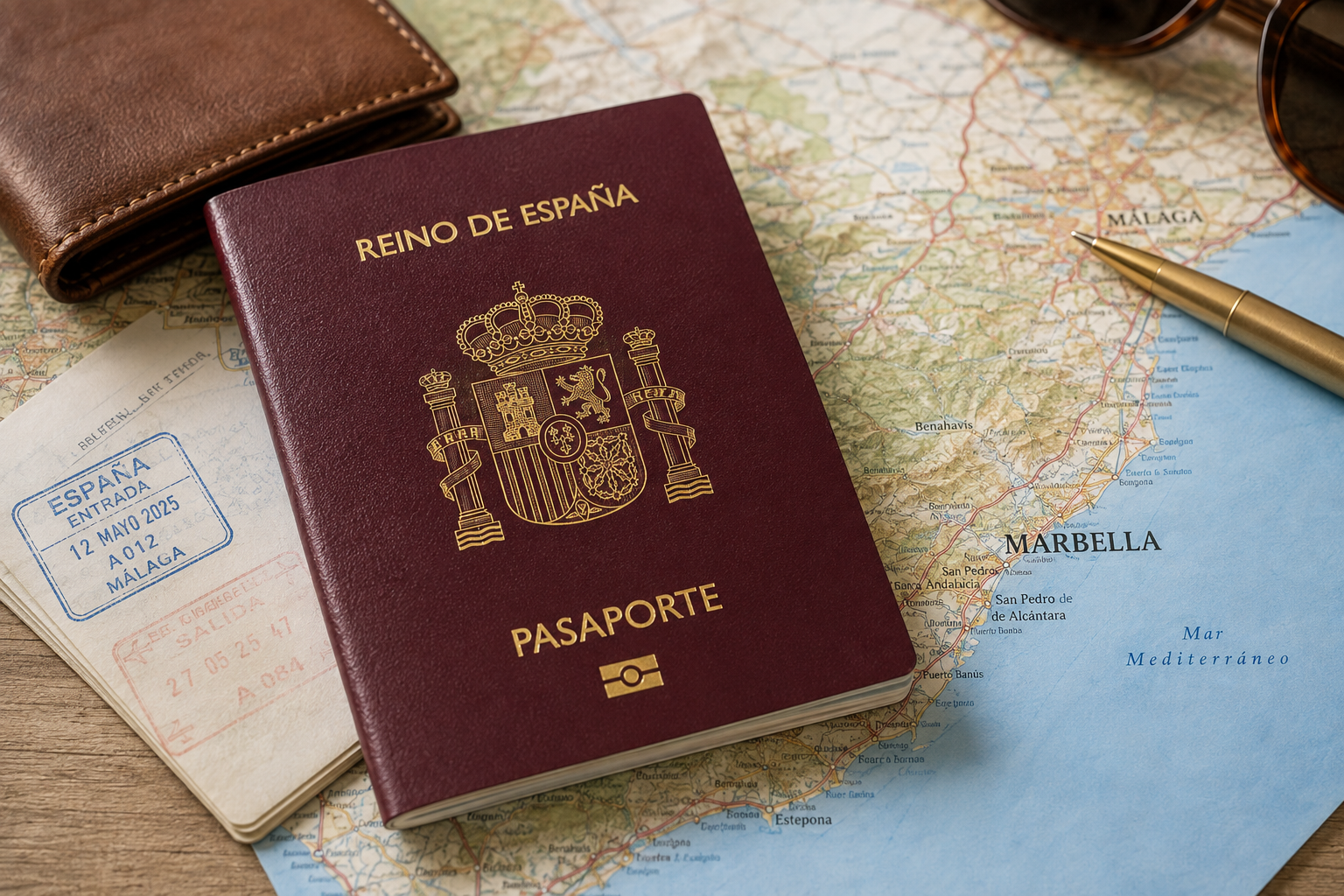
Spain’s Golden Visa programme ended on 3 April 2025, but this changed the route to residency, not the right to buy: non-EU nationals can still purchase property in Marbella freely, with no restrictions on foreign ownership. Buyers seeking to spend extended time in Spain now typically look at the Non-Lucrative Visa, which requires proof of roughly €28,800 or more in annual income for the main applicant plus private health insurance, or the Digital Nomad Visa for remote workers and freelancers earning income from abroad. Owning property in Marbella also helps satisfy the proof-of-accommodation requirement for these applications and strengthens the overall case for financial stability, even though it’s no longer a direct path to residency on its own.
10. Rental demand gives owners a genuine income option
Marbella’s short-term rental market recorded a median annual revenue of around €50,000 per listing between February 2025 and January 2026, across roughly 5,600 active listings, with an average daily rate of about €201 and a median occupancy rate of 67%. Typical net yields sit between 3.5% and 5.5%, with prime, high-quality assets reaching 7–9% in peak season in the strongest pockets of demand. It’s worth flagging that Marbella has also moved toward one of the strictest short-term rental regulatory regimes in Spain, so licensing status and community rules should be checked carefully for any specific building before buying with rental income in mind.
Buying in Marbella with CarlingPetri
Why buy property in Marbella with CarlingPetri specifically? Because every one of the reasons above plays out differently depending on which part of Marbella you’re looking at — the Golden Mile, Nueva Andalucía, Puerto Banús and Benahavís all offer a different mix of price, lifestyle and access. Explore our Area Guides for a neighbourhood-by-neighbourhood breakdown, browse current listings in Marbella, or talk to the CarlingPetri team about which area fits your budget and lifestyle.
FAQ
Why Buy Property in Marbella in 2026?
Yes — Marbella’s average price per m² rose 9.4% year-on-year into 2026 to around €5,524/m², and foreign buyers already account for over 60% of local transactions, reflecting sustained international demand rather than a short-term spike. The luxury segment in particular remains strong, with the majority of purchases above €2.5 million made in cash by foreign buyers.
Do I still need a Golden Visa to buy property in Marbella?
No. Spain ended its Golden Visa programme on 3 April 2025, but this only affected the residency-by-investment route — non-EU nationals can still buy property in Marbella without restriction, in any amount, at any price point, exactly as before.
How do I get residency in Spain after buying property in Marbella?
The most common routes now are the Non-Lucrative Visa, for those with sufficient passive income (roughly €28,800+ a year for the main applicant) who don’t intend to work in Spain, and the Digital Nomad Visa, for remote workers and freelancers earning income from abroad. Property ownership doesn’t grant residency directly, but it can support the proof-of-accommodation requirement for both routes.
Is Marbella well connected to the rest of Europe?
Yes. Málaga Airport (AGP) is about 45 minutes from central Marbella and offers direct flights to 169 destinations in 42 countries via 52 airlines, making it one of the best-connected regional airports on the Mediterranean coast.
Can I earn rental income from a property in Marbella?
Yes, though returns vary considerably by area, property type and licensing status. Short-term rentals in Marbella showed median annual revenue of around €50,000 per listing in the year to January 2026, with net yields generally between 3.5% and 5.5%, and up to 7–9% for prime assets in peak season. Marbella has also tightened rental licensing rules significantly, so this should be checked carefully before buying with income in mind.
Is Marbella good for families relocating from abroad?
Yes. The area has more than 20 international schools covering British, American, IB, German, French and Spanish curricula for ages 2 to 18, alongside established international private healthcare providers such as Quirónsalud and Hospiten, both of which run dedicated English-speaking patient units.
Sources for facts and figures cited: DM Properties Marbella market report; Panorama Marbella market report; Idealista January 2026 data; flightconnections.com and airportinformation.com AGP destination counts; weather-and-climate.com Marbella climate data; Panorama Marbella golf courses guide; Quirónsalud and Hospiten official sites; international-schools-database.com; Numbeo / Buen Barrio Marbella data; Airbtics Marbella Airbnb data 2026; Global Citizen Solutions and Ábaco Advisers on Golden Visa alternatives 2026.